
Mens Hairstyles in the 1920s: 10 Iconic Classic Looks
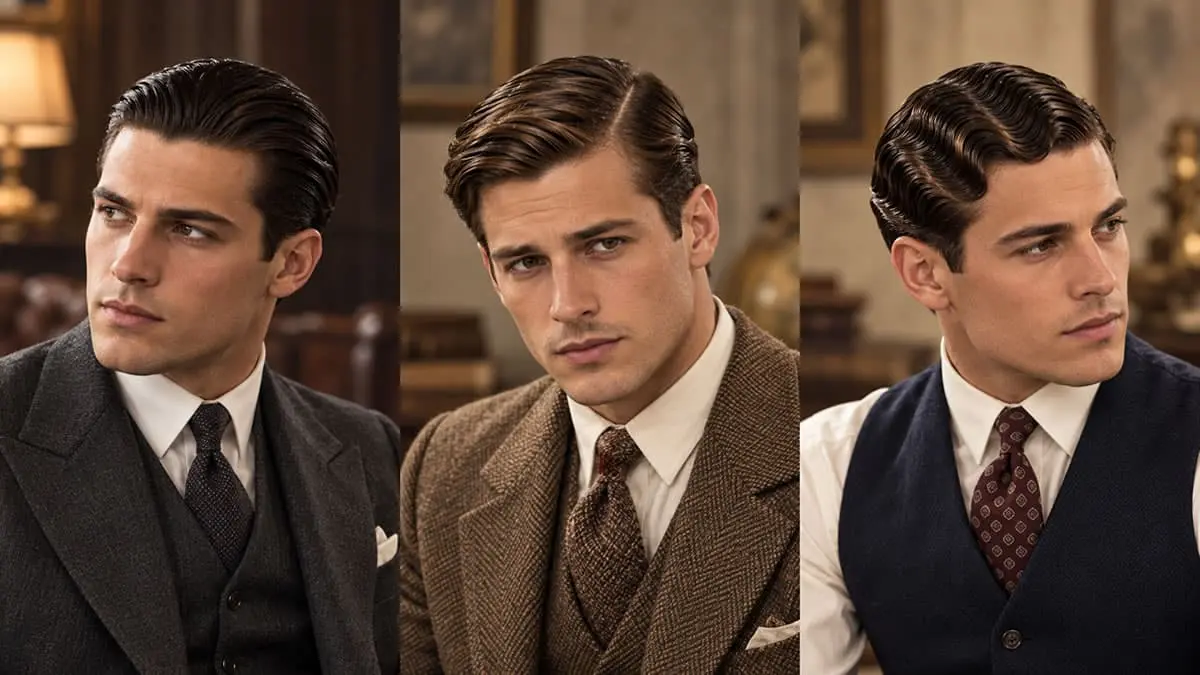
Mens hairstyles in the 1920s often emphasized controlled shape: a precise side part, closely combed waves, or a slicked-back look. The defining detail was direction, not height, with grooming products helping the finish stay smooth. These deliberate lines gave shorter cuts their distinctive character.
For a modern interpretation of men’s hairstyles of the 20s, start with natural hair growth and personal style. A tailored outline can suggest the Roaring Twenties without excessive shine. These 10 looks explore hairstyle variations through part placement, texture, and the balance between everyday wear and formalwear.
10 Best Mens Hairstyles of the 20s
1. Classic Slick Back
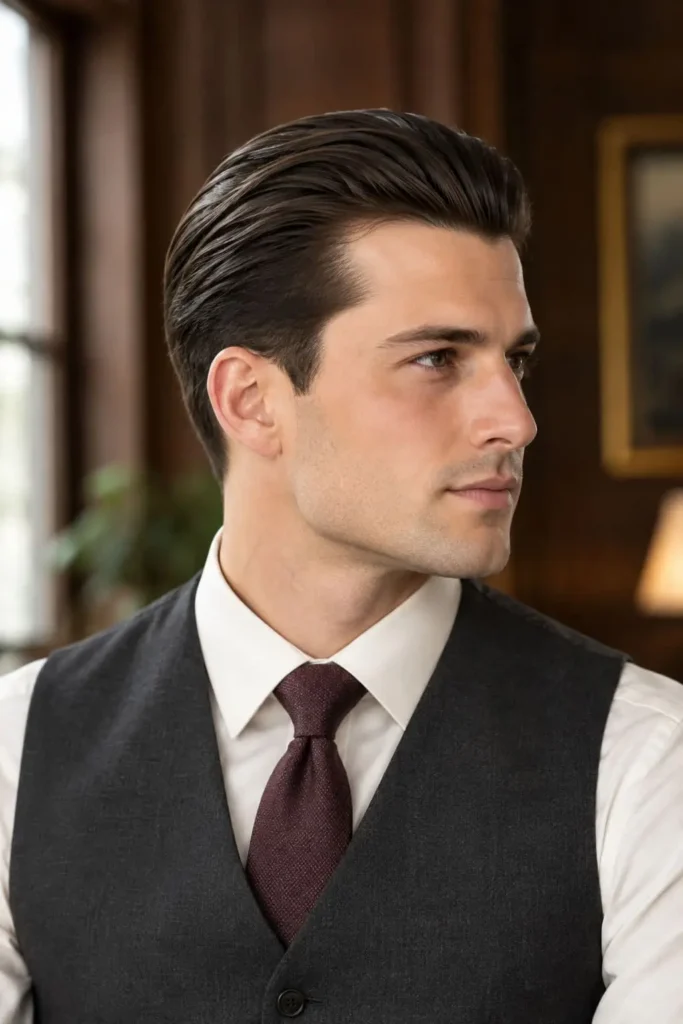
The classic slick back defined a decade of grooming for sophisticated urban men, who tamed every strand into a helmet of heavy shine. Pomade or Brilliantine worked the crown, pulling hair combed straight back across the head with unmistakable polish.
Barbers kept the sides closely cropped while leaving extra length on top, a base look built for slicking back. A wax-based product or oil-based product locks the slicked back shape, so short sides frame hair pushed straight back without a single loose lock. This same technique still reads polished today — see our professional long hairstyles for guys guide for a modern take on the slicked-back look.
2. Slicked Side Part
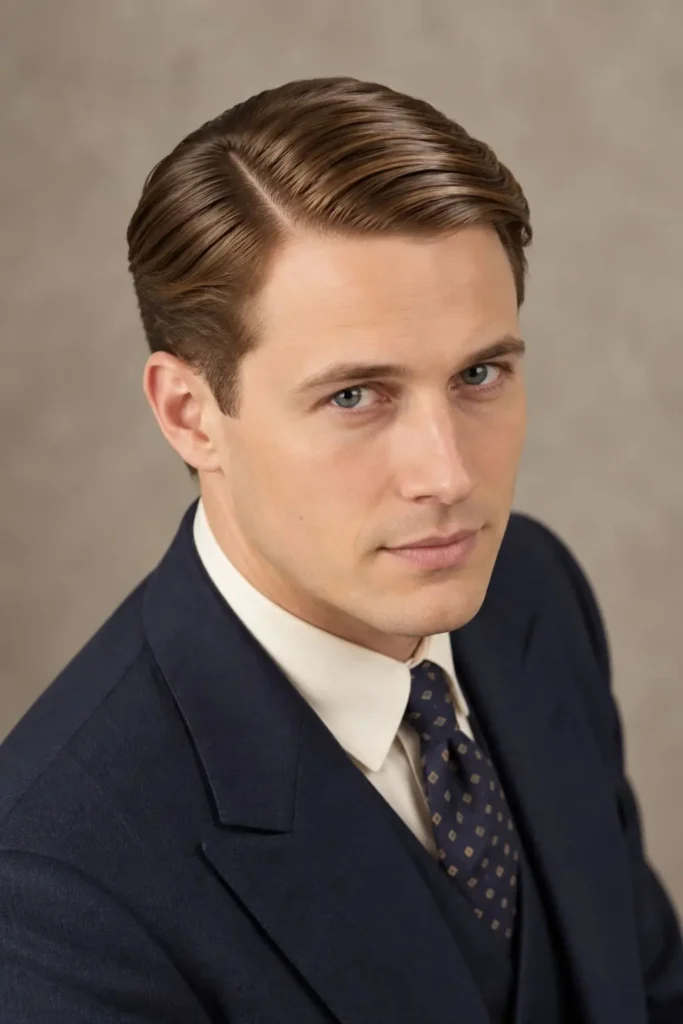
Oil and heavy pomade throw high-shine; wax or a light pomade reads matte. Any oil-based product anchors a slicked side part. A hard side part is razor-cut to define the part, sitting off-center in deep side parts, the shorter side lying combed flat while the sides frame a side part.
King George V favored it. On round faces, asymmetry lengthens the face and sharpens the jawline no center part or parted center can. Longer top hair at medium length gets pushed to the side; a combover masks thinning hair; tapered hair cleans back and head, the winged silhouette is not fully slicked back.
3. Slicked Middle Part
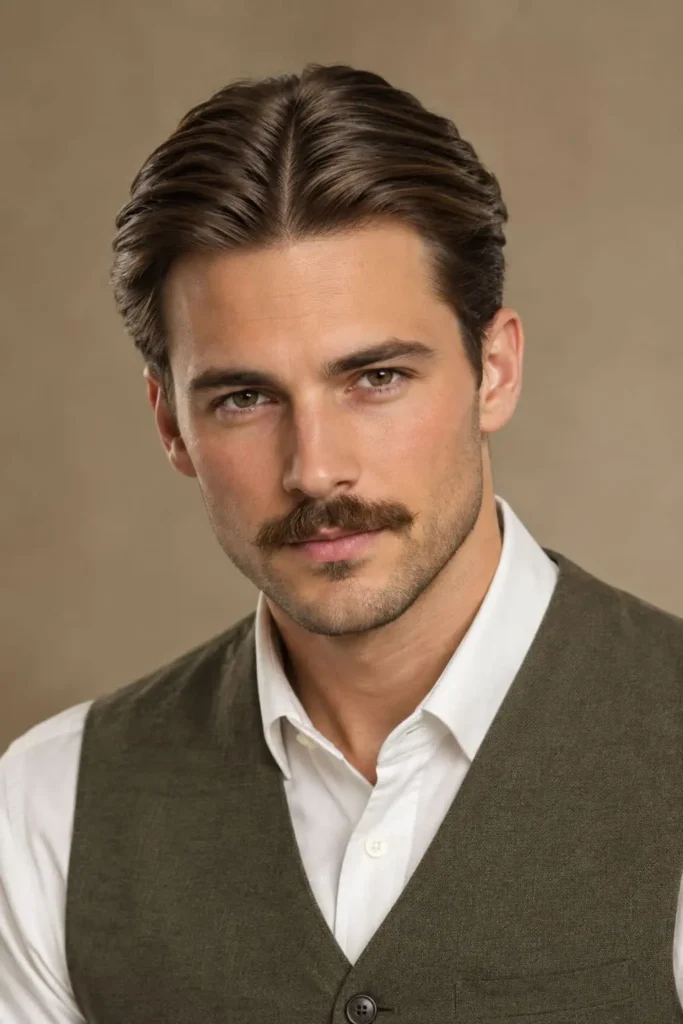
Barbers of the era rarely pitched the slicked middle part as a required style; it emerged instead as a casual look favored by younger men who wanted the decade’s polish without the fuss of a rigid slicked back hair finish. Where a combover or center parting flattered older men masking a receding hairline or thinning hair, this straight center part paired tapered sides with a longer top. Pomade let wearers push back hair at the back, unlike a symmetrical center part worn low.
4. Slicked Undercut
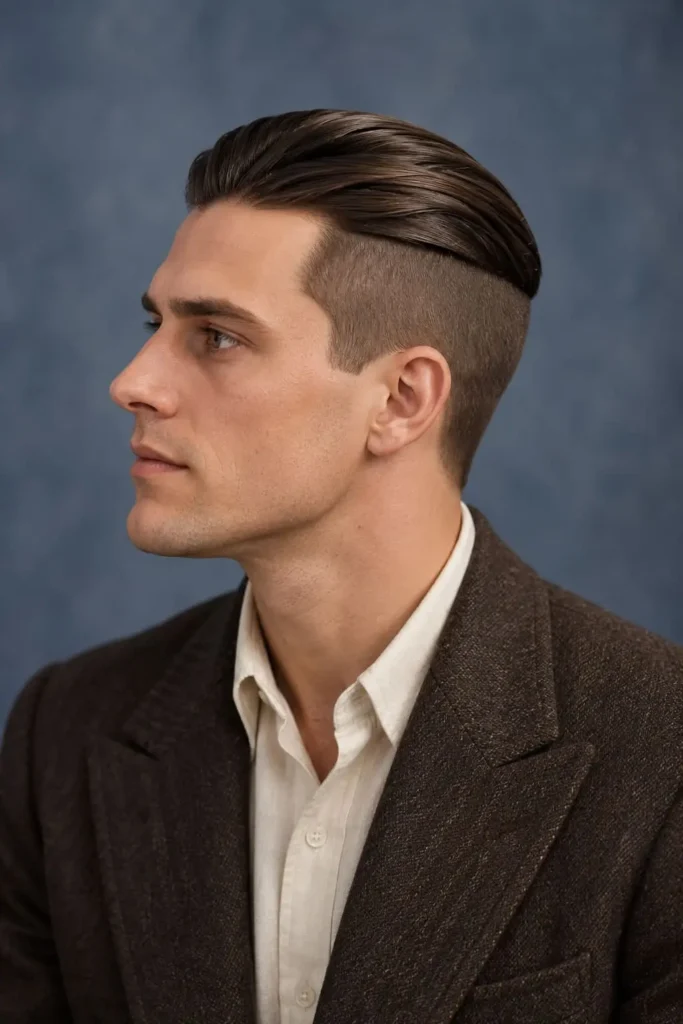
The undercut style worked through stark contrast, and the undercut itself defined the era: clippers buzzed short sides while a barber kept the top long, shaved completely near the crown, with shaved sides bare and longer top hair left as focal weight.
Styling turned technical up top. Scissors shaped the longer hair, then pomade locked a sharp parting into place. Whether parted cleanly or slicked back, the comb-back motion mattered—pushing back strands, a firm slick back, or a close-cut blend fading toward the back.
5. Comb-Over
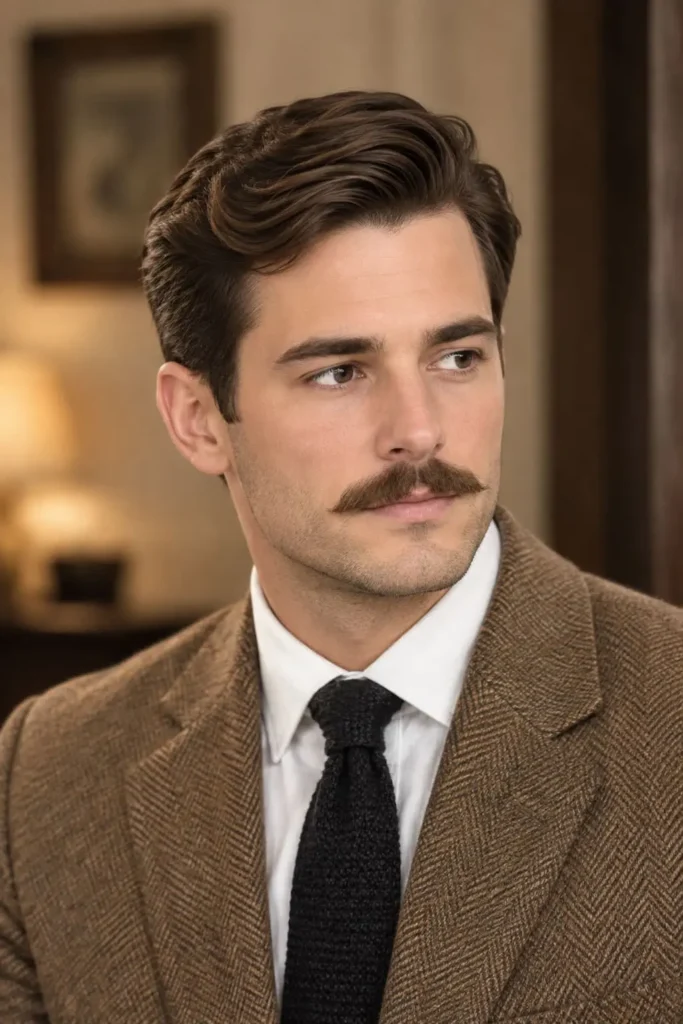
The comb-over relied on longer hair kept up top, worked with pomade into a slicked side part. Gentlemen would comb hair over the part, sometimes carving a hard, visible part across the head, while a looser, tousled look softened the strict side part for evening wear. For a more contemporary take on this technique, see our mens mod hairstyles guide.
6. Finger Waves
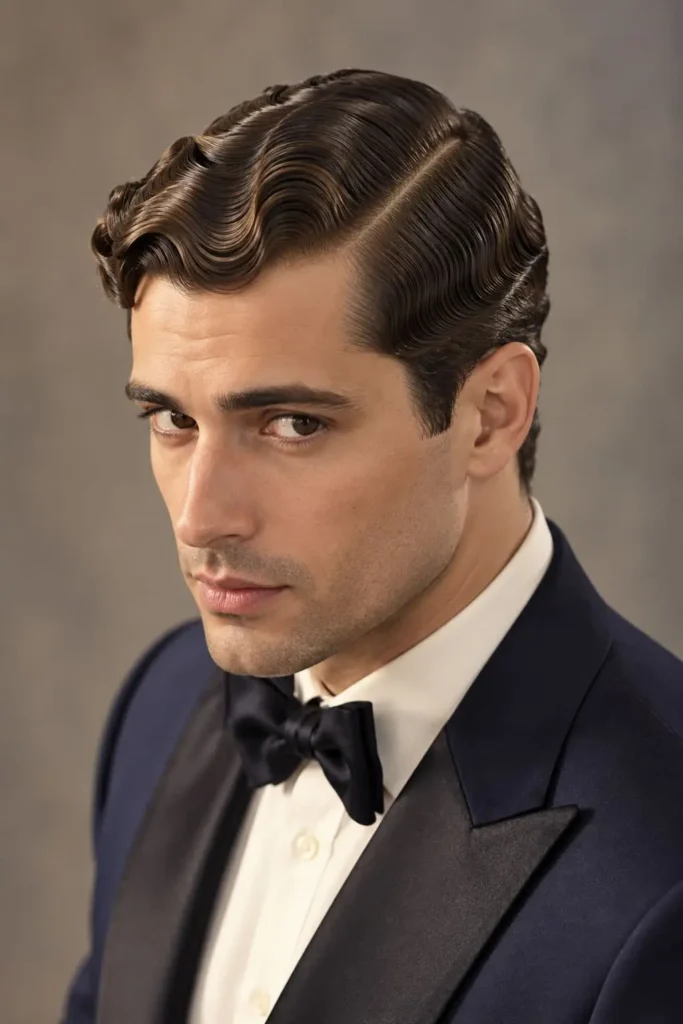
Borrowed from women’s style, finger waves entered menswear as a bold ’20s statement. Wavy-haired men and curly-haired men wanted hair shaped into waves, their natural texture held with pomade or heavy oil to hold curls, coaxed into a sleek fingerwave style far from careless bedhead styling.
Some men pushed straight back every strand, others worn parted at a parted side or center; a few chose no part. Hot irons and Brilliantine built shine, letting movie stars flaunt loose curls, defined waves, or a smooth, straightened finish beneath a hat — a clear precursor to later grooming.
7. Curly Hair
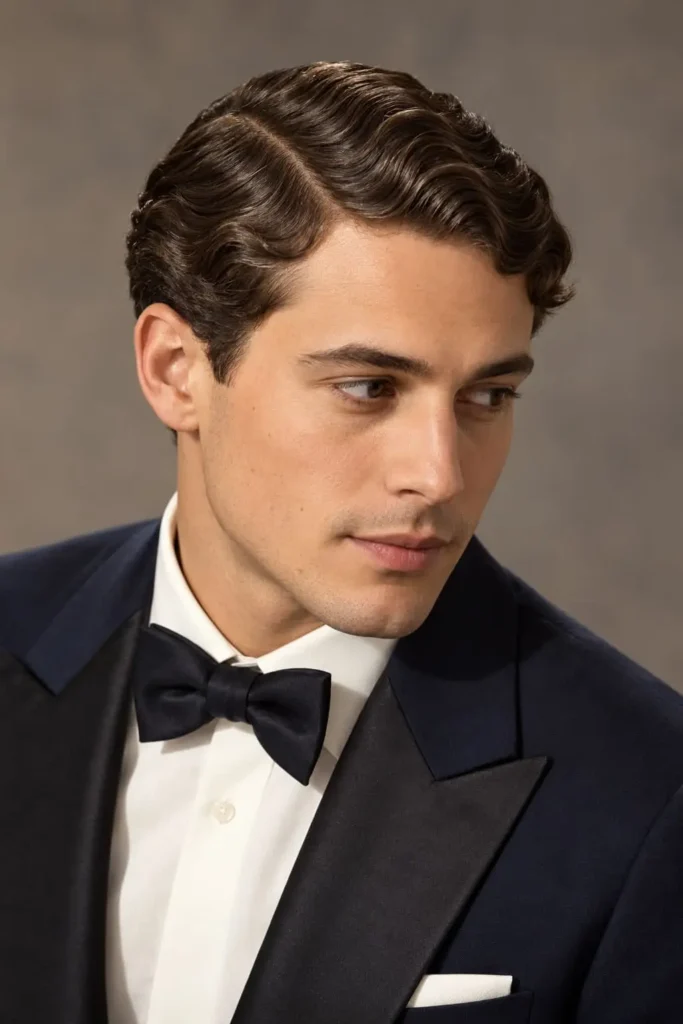
For curly hair, the smartest 1920s variation lets natural curls breathe: slick back sides tight while keeping a natural top loose. A dab of pomade eases styling curls without flattening them, letting texture fall forward. That controlled side definition delivers the era’s polished slicked back look.
8. The Conk
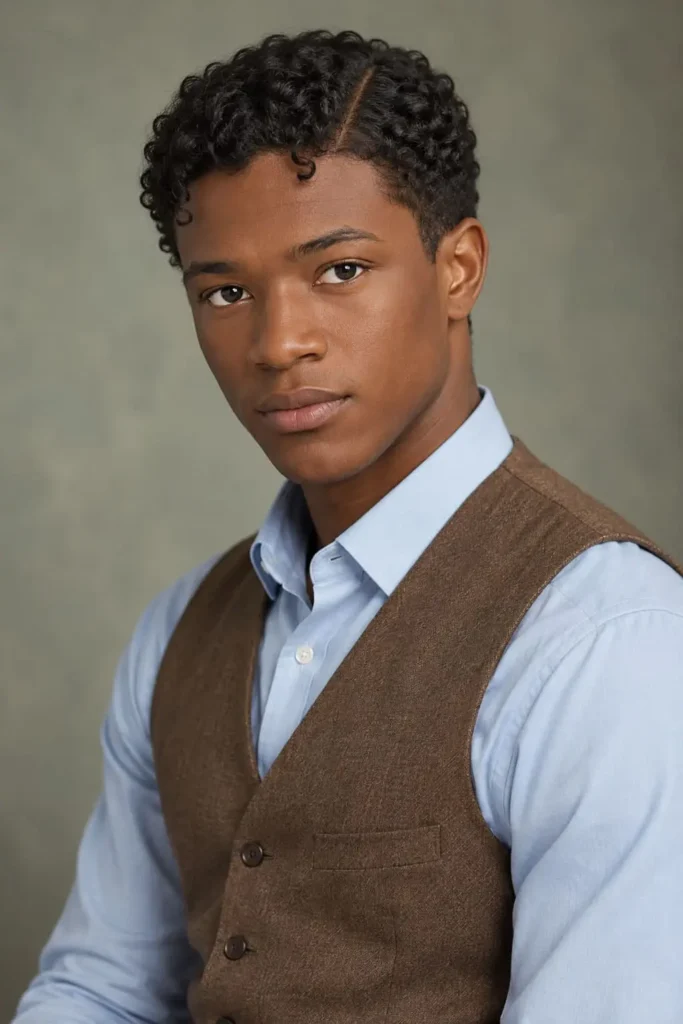
Among African American men, the conk hairstyle demanded serious commitment. Applying lye as a straightener meant enduring harmful chemical burns throughout its painful maintenance. This risky home technique of the 1920s produced a sharp slicked-back look echoing the decade’s celebrated pompadour style.
9. Crew Cut
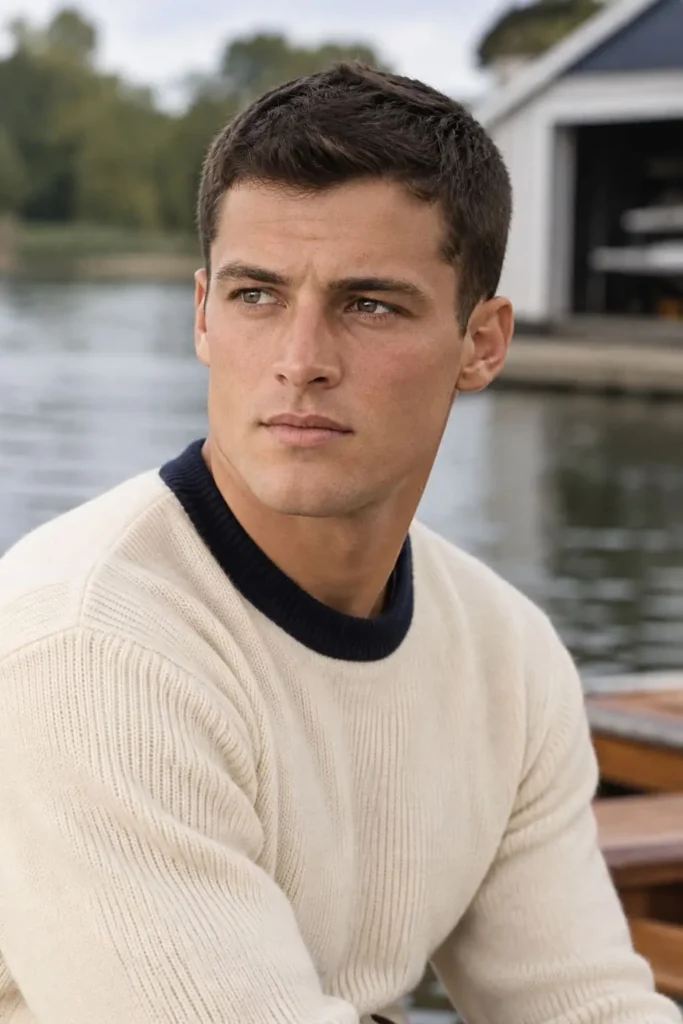
Rowers first popularized this look, and the university rowing crew origins explain its efficient, no-fuss style. A simpler alternative to elaborate coiffures, the crew cut keeps the sides and back trimmed to a uniform short length while the longer top stays clean-cut — later a Hollywood symbol of practicality.
10. Hats
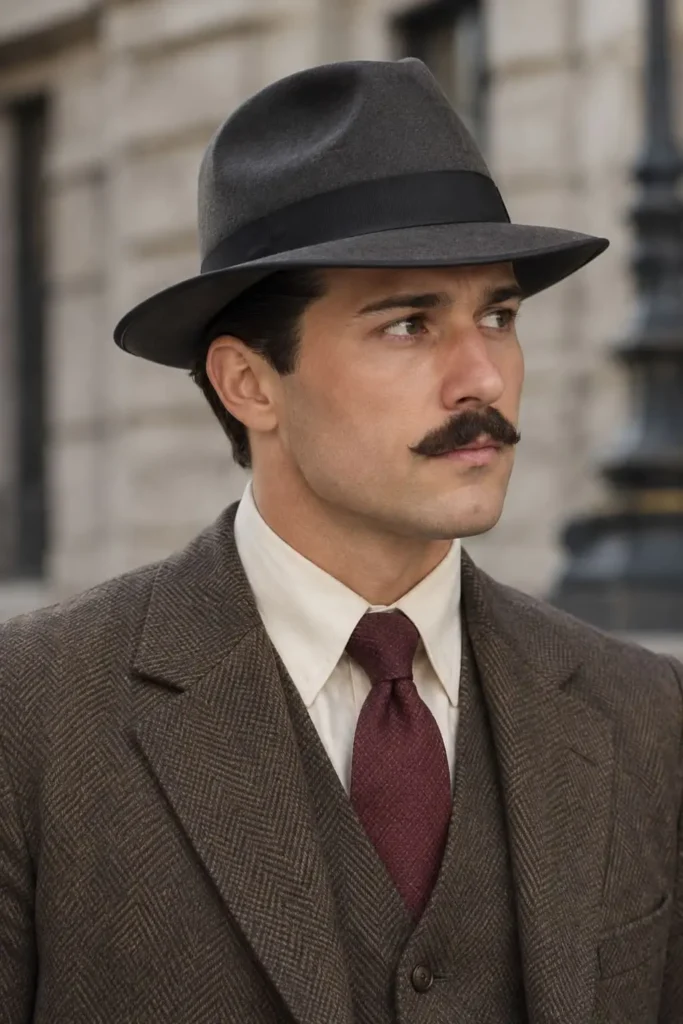
Headwear signaled social status throughout the 20s, and the right crown finished every outfit. A felt hat or sharp fedora ruled cooler stretches, while straw boater hats became the warm season’s fashionable option. Laborers favored flat caps, worn neatly above short, slicked hair beneath dependable hats.
Mens Hairstyles in the 1920s FAQs
What hair products did men use in the 1920s?
Barbers of the era leaned on pomade and Brilliantine for those slick, structured looks, while oil-based products rich in lanolin and beeswax worked to nourish each strand across the scalp. Hair tonics promised far more than surface shine; wax-based products and dense styling waxes delivered a noticeably stronger hold, whereas lighter oils chased that glossier finish, which lasted comfortably through humid afternoons.
What was the most popular/iconic hairstyle of the 1920s?
The clean slicked-back look reigned as the dominant style among mens hairstyles of the 20s, though the Gatsby cut shaped how gentlemen approached grooming. A crisp side part paired short sides with a longer top, defining that decade’s polished, unmistakable silhouette.
Did men wear finger waves?
Though finger waves dominated women’s styling, the decade saw daring style blending into menswear. A handful of bold gents borrowed this women’s grooming trick, quietly reshaping men’s grooming norms with sculpted, glossy ripples.
How did men part or style their hair day to day?
Throughout the decade, most gents favored an off-center line, though plenty stayed parted centrally. A deeper side part flattered older men, while chaps facing thinning hair simply combed straight back for tidy, fuss-free mornings.
What were some defining features of 1920s men’s hairstyles overall?
The rise of the undercut redefined barbering, pairing shorter lengths with a sleek slicked-back finish. Remarkably versatile, precise side partings carved by a straight razor turned each cut into an individual style choice reflecting refined restraint.
One Comment