Protective Hairstyles for Sleep: 13 Easy Overnight Styles for Every Hair Type
Protective hairstyles for sleep are low-tension hairstyles that keep hair contained while limiting friction and tangles overnight. The useful test is comfort: a style that feels secure standing up may press against your head in bed. Choose placement around your sleeping position, not just appearance.
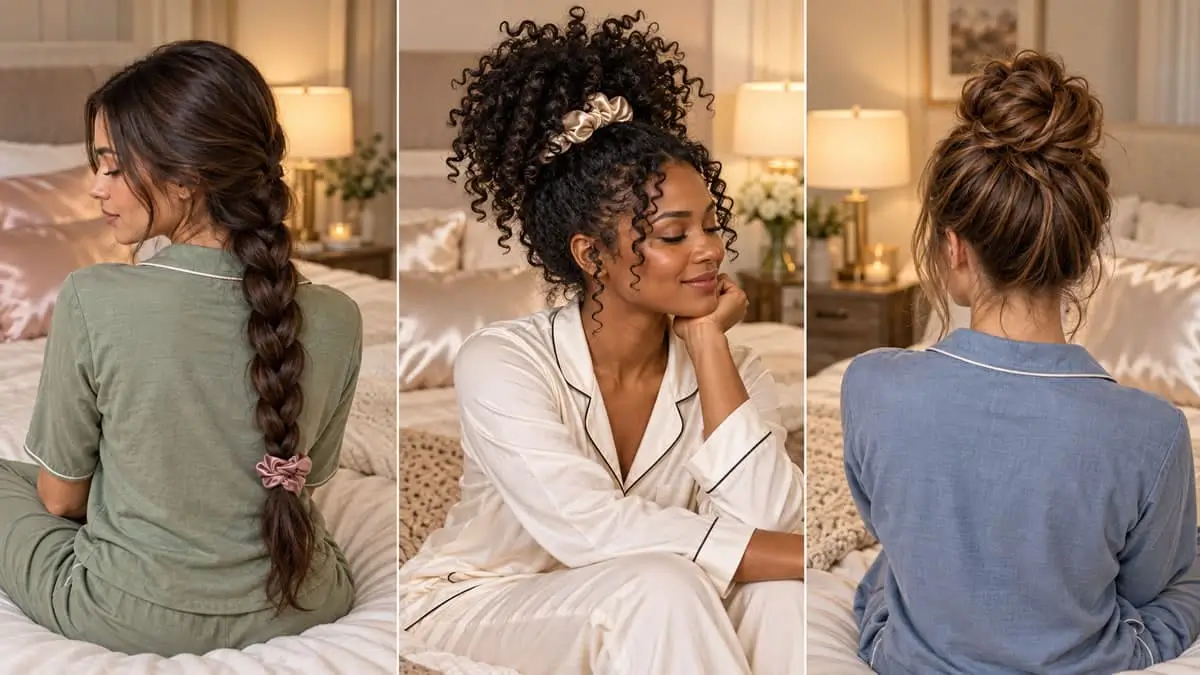
Start with your morning goal: loose braids encourage waves, while pineapples help preserve curly hair. A silk pillowcase complements the style without requiring a tighter hold. These 13 easy overnight styles offer options for every hair type, with comfort guiding the choice before morning styling.
13 Easy Overnight Styles for Every Hair Type
1. Loose Braid
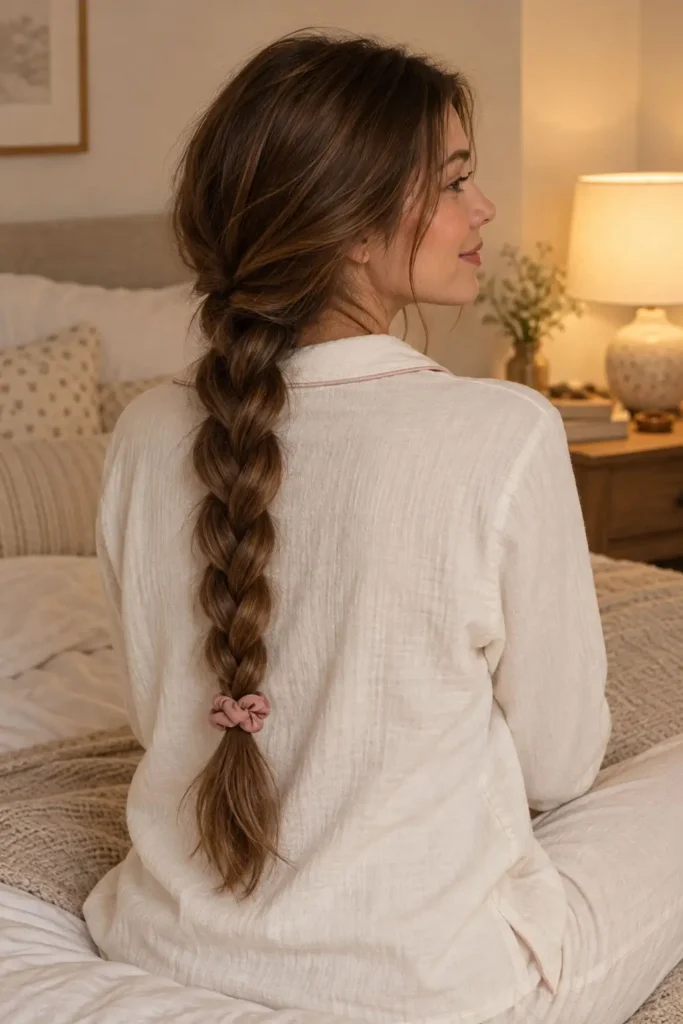
The loose braid earns its spot as a top overnight pick because it’s so easy. It asks no special technique, just a simple, low-effort three-strand braid worked down and ends tucked in. Mind the braid tightness, because anything too tight invites knotting, snagging, and hard creasing come morning.
Because friction builds while back sleepers and side sleepers shift overnight, the style shields fine hair, long hair, and mid-lengths against split ends and tangling. Smooth a little serum through for moisture, secure with a silk scrunchie, and straight hair loosens into soft textured waves.
2. Loose Bun
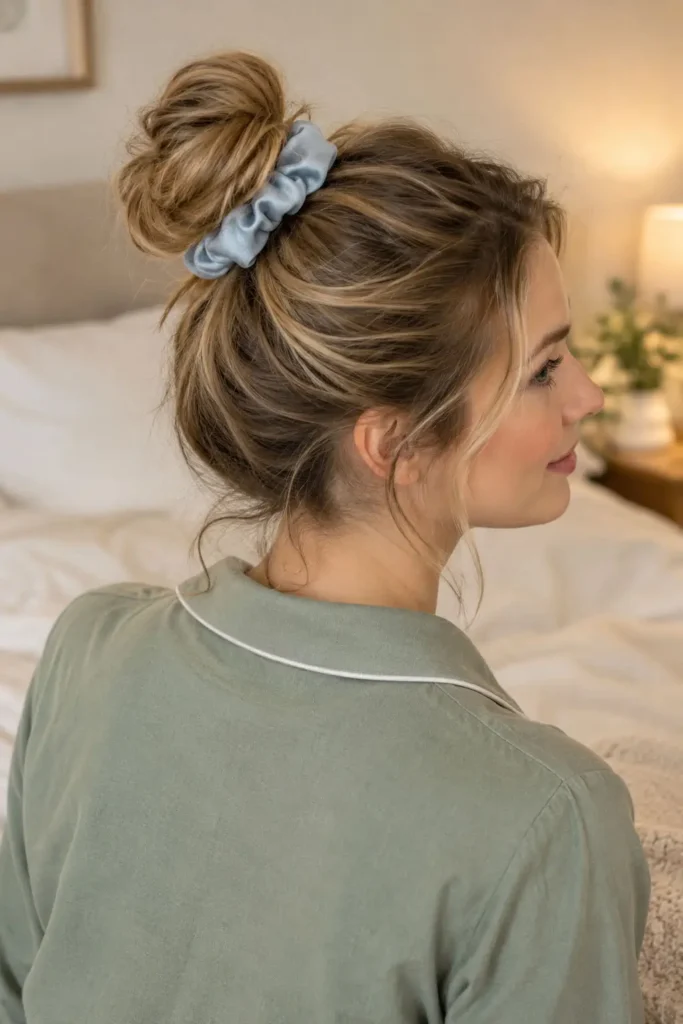
A loose bun should sit where your pillow will not press against it. If you move around at night, try a high loose bun rather than one at the nape. Keep the roots relaxed; a style that pulls feels less comfortable and adds unnecessary tension.
For long hair, twist once, then secure with a silk scrunchie, leaving enough slack to slide a finger underneath. The aim is to hold hair in place overnight, not tighten every strand. Unwrap gently in the morning; a soft bend may remain, depending on texture.
3. Dutch Braids
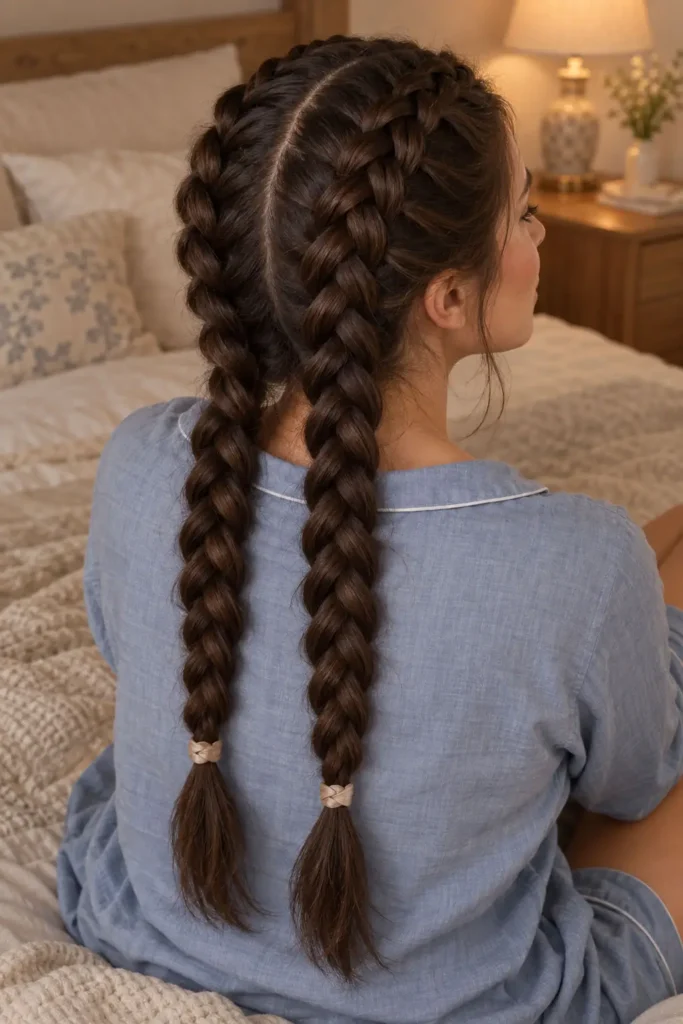
Waking up to wand-like curls without a curling iron is the quiet payoff of Dutch braids. Divide curly hair into two parts, smooth on a lightweight leave-in conditioner, then braid your hair back along the scalp. This no-heat sleep style leaves defined texture by morning.
Practicality matters most for silk press, straight blowout, or sew-in wearers. Two braids or straight-back braids keep extensions secure among overnight protective hairstyles, and protective sleep styles limit friction. Even a messy braid can unravel gently into a relaxed daytime look.
4. Silk Scarf / Wrap
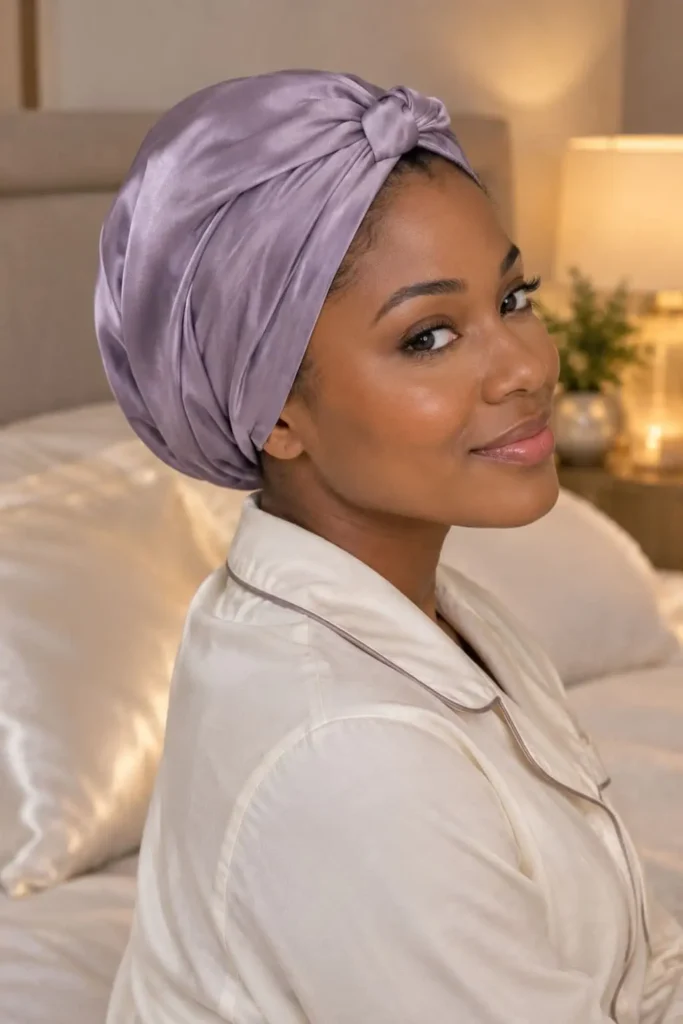
Fine hair feels fragile after a late shower, so a silk scarf folded over damp hair keeps friction away. Tie it soft, not tight, and it stays put while hair lies flat. Loose pins are enough; no damaging heat means less frizz and fewer split ends.
A silk wrap or satin wrap suits curly hair because a twist or braid keeps ends together and moisture sealed. Short hair and very short hair suit a handkerchief or durag, while silk pillowcases help preserve hair and reduce breakage as strands dry overnight.
5. Curly Pineapple
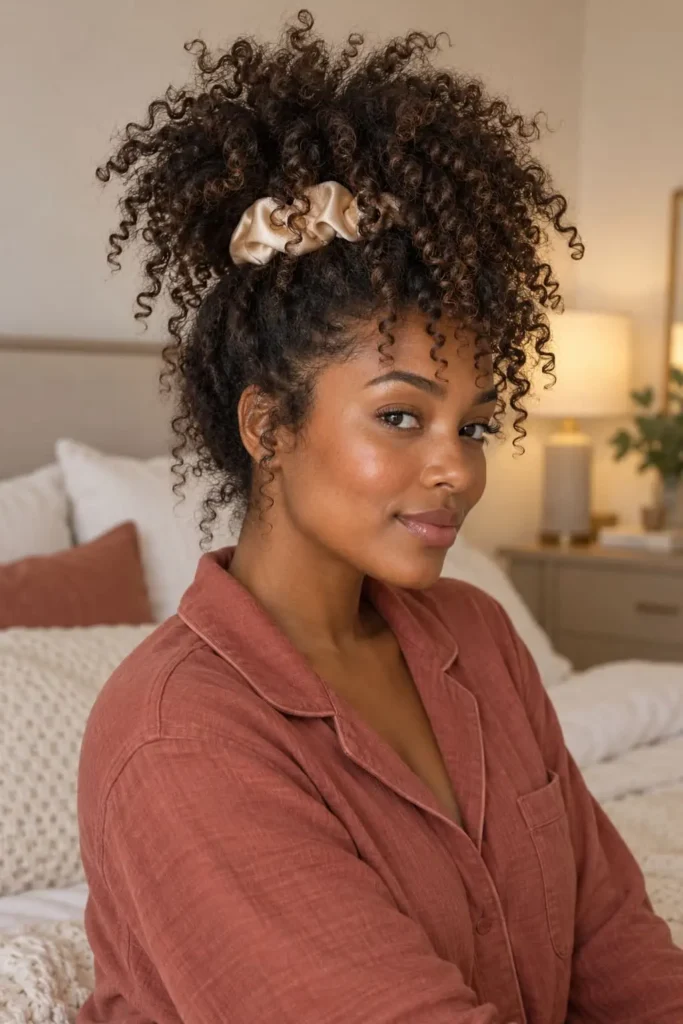
Loose pineapple styling suits Type 3 and 4 textures because you flip your head over and gather everything at the top of the head without tension. Secure a high loose ponytail with a silk scrunchie, then cover it with a satin bonnet for protection and less frizz.
Morning brings back curl definition: fluff out curls gently and let the cascading pineapple effect restore volume to coily 4A–4C hair and shrinkage-prone strands. Keep a satin pillowcase as a backup, and with long hair, try two or three small pineapples instead every night.
6. Low Loose Ponytail
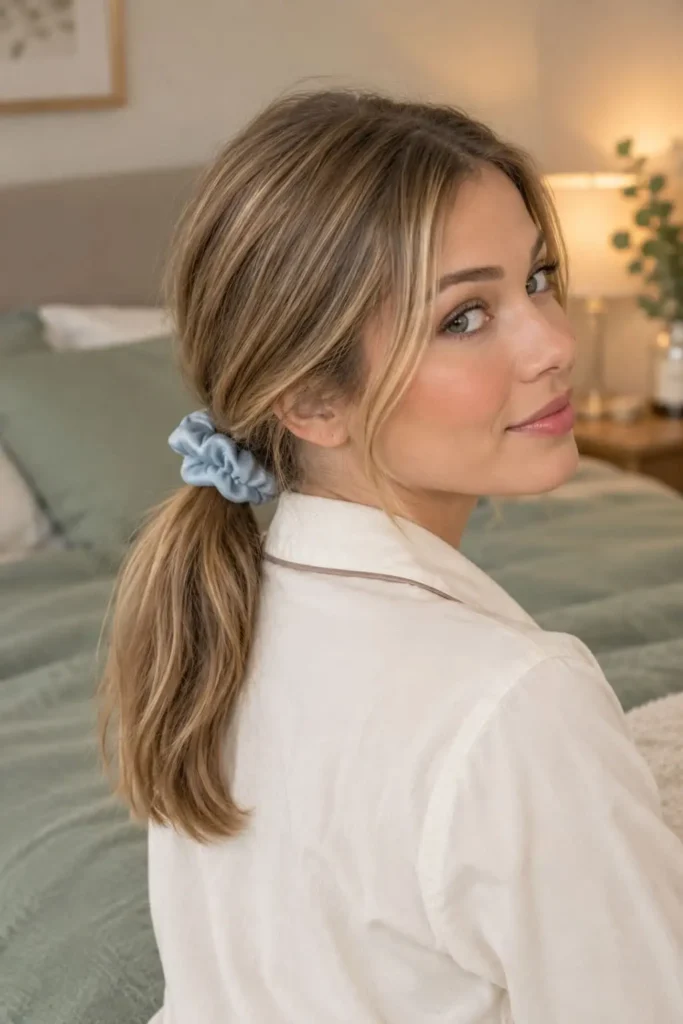
A low loose ponytail works best on straight hair and fine hair because it keeps natural volume without tugging. Secure it with a silk scrunchie, keep it gentle on roots, and cut friction against cotton pillowcases, which instantly lowers breakage and damage risk.
Add a silk sleeping cap as a barrier, and mornings turn frizz-free and tangle-free, with noticeably less frizz and smoother hair. It also limits excess hair loss and flatness, keeping a smooth texture all night. Even protective styles for short hair can borrow this trick with a sleep cap.
7. Multiple Braids Hairstyle
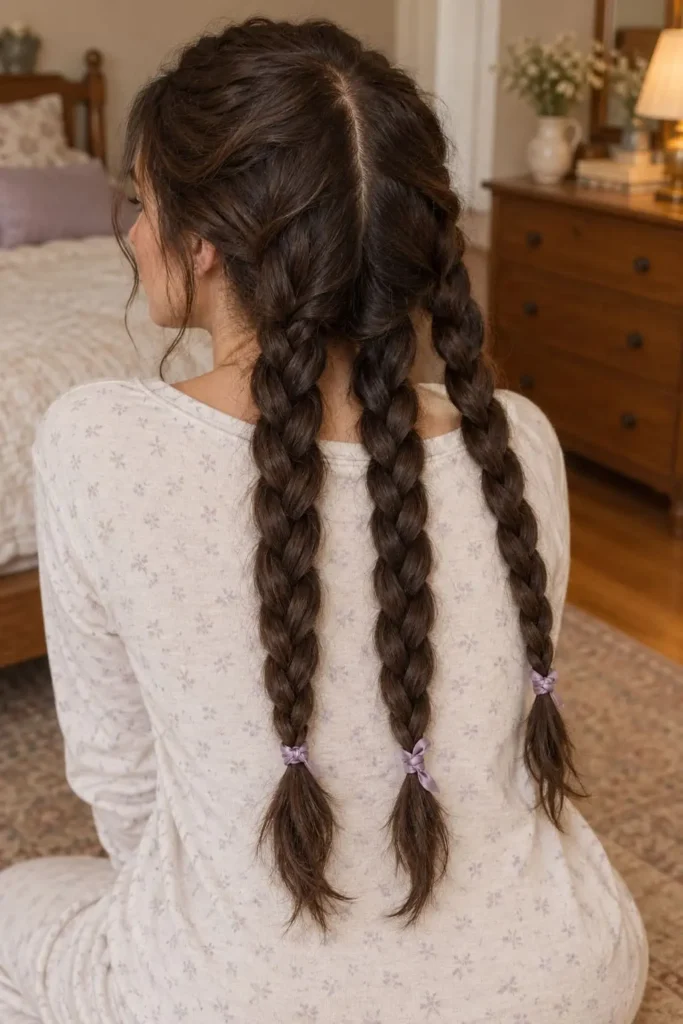
Skip the heat style entirely: towel-dry wet hair, mist leave-in conditioning spray, then split thick hair into four quadrants. Gutterman-style single braids or multiple braids suit long hair, while large braids finish faster. Smaller plaits create tighter crimps, and moisture stays locked in until morning.
Curl pattern decides everything: wavy hair often needs only two loose braids, while coily textures prefer individual braids in four sections. French braids hug the scalp for bed. Leave braids in through sleep, unravel gently, and the braid-out gives soft beachy waves with extra shine.
8. Heatless Overnight Curls
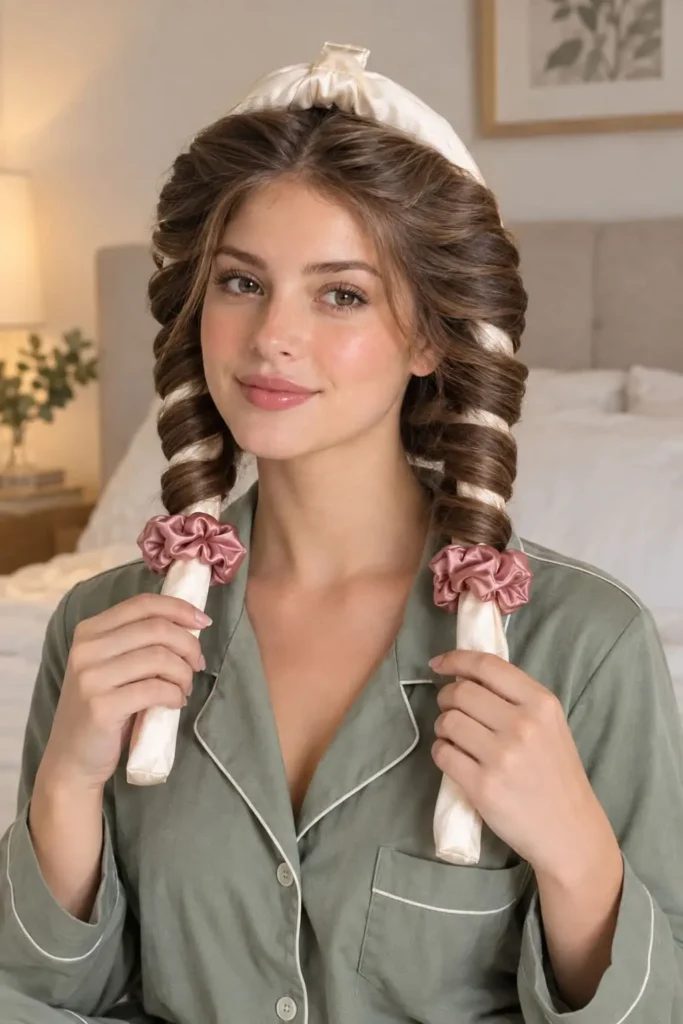
Heatless overnight curls work best on damp hair, never soaked. Smooth a lightweight leave-in through medium hair, then wrap sections around flexi rods or a soft robe belt. Finishing with a bonnet keeps everything snug, and the result is zero heat damage by morning.
Long hair responds well to twist sections or small braids, and a dab of curl cream adds definition. For more everyday styling ideas that pair with this overnight method, see our easy hairstyles for long hair guide. Slide onto a silk pillowcase, then wake up to voluminous waves and a polished daytime look that needs only a quick fluff and no styling tools.
9. Bubble Ponytail
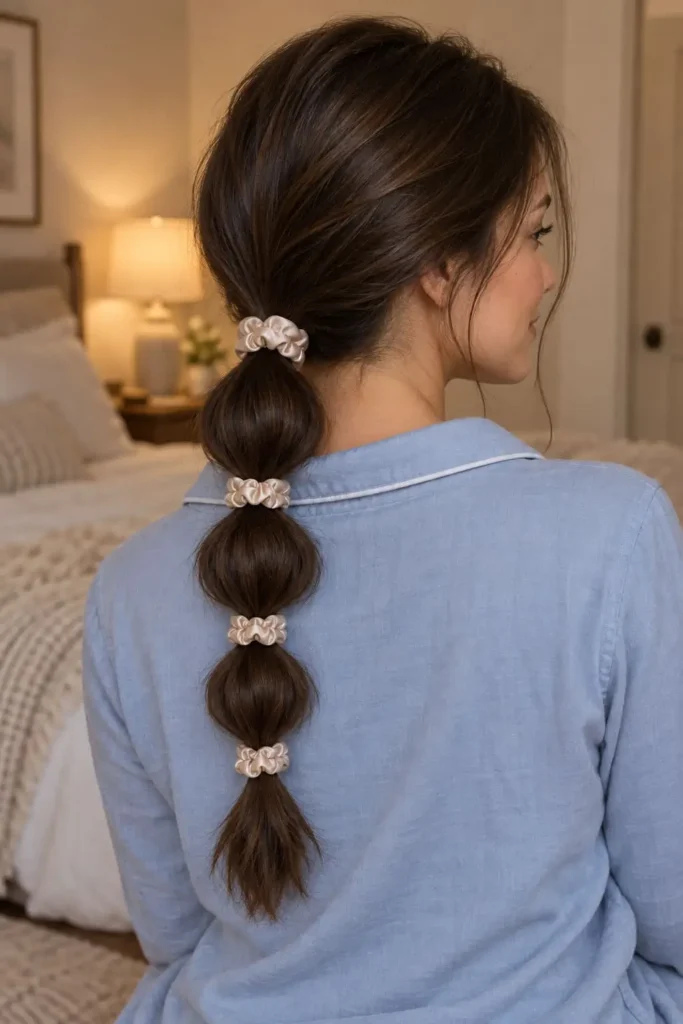
A bubble ponytail works best on a few-days-old blowout or silk press, because soft texture holds sections without fuss. Work a little serum through the length first, then brush through hair before securing. Space each silk scrunchie two inches apart so nothing pulls too tightly overnight.
Vanessa Ocando’s take is a protective option for no-heat styling, leaving wavy bends instead of harsh creases. Add a drop of oil to seal moisture, and choose gentle scrunchies for the ponytail end, so the morning waves look relaxed and natural.
10. Clipped-Up Box Braids
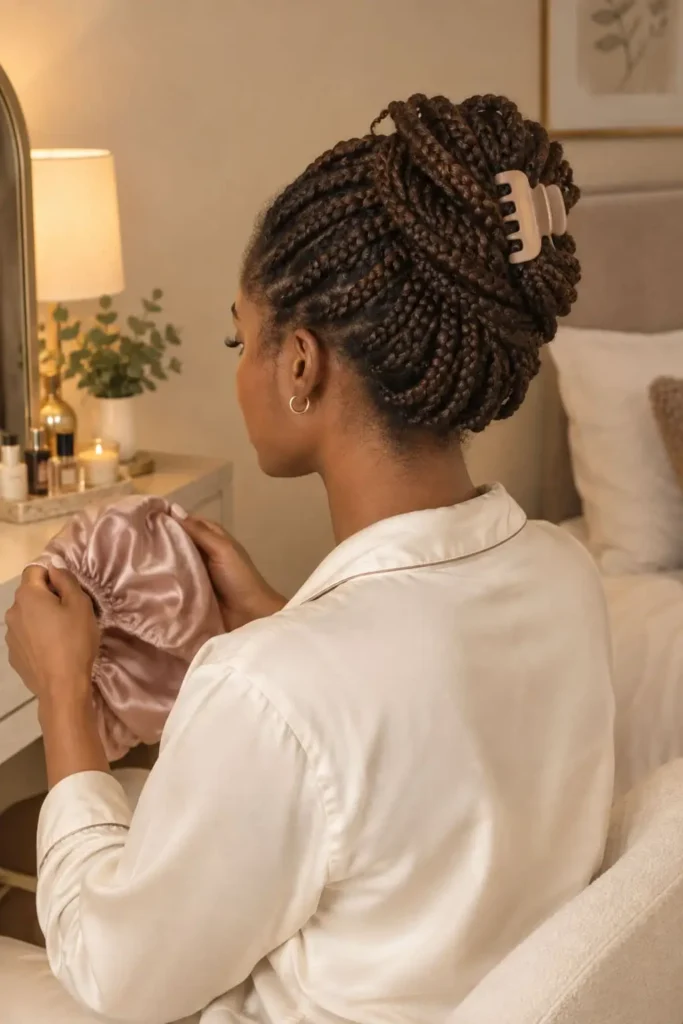
Clipped-up box braids suit anyone who hates fighting a tangled mess after sleeping. Gather everything with a claw clip at the crown, keeping strands out of your way and off your neck. A silk scrunchie or elastic band works too when a firmer tie-up feels safer.
Cover the perimeter of your hair with a satin silk hair bonnet or silk bonnet, then press edges smooth against the fabric. A silk pillowcase adds backup through the night, limiting frizzing so braids last longer. At wake-up, unclip, shake loose, and enjoy a neater, protective style.
11. Twisted Ponytail
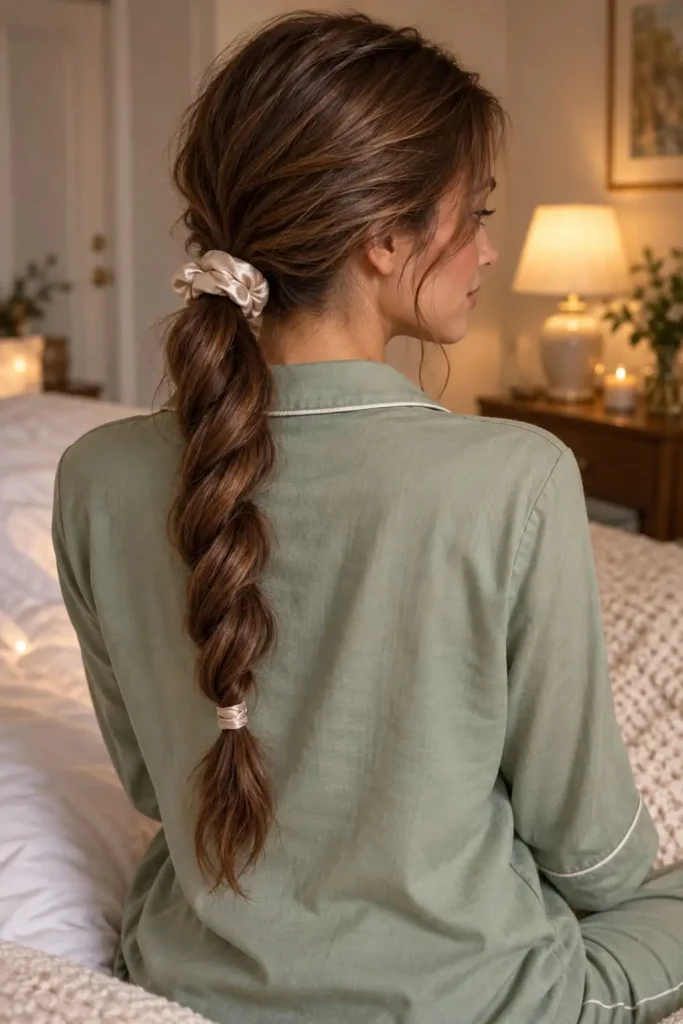
Curly hair often behaves best after a twisted ponytail: brush back the crown, distribute the product evenly, then twist and secure lengths loosely before sleep. Straight hair tolerates this too, though the shape holds less. Apply a serum or treatment mask beforehand; light products work best. By morning, unravel the twist gently for soft spirals, and wash your hair out later only if buildup still lingers.
12. Straight-Back Cornrows
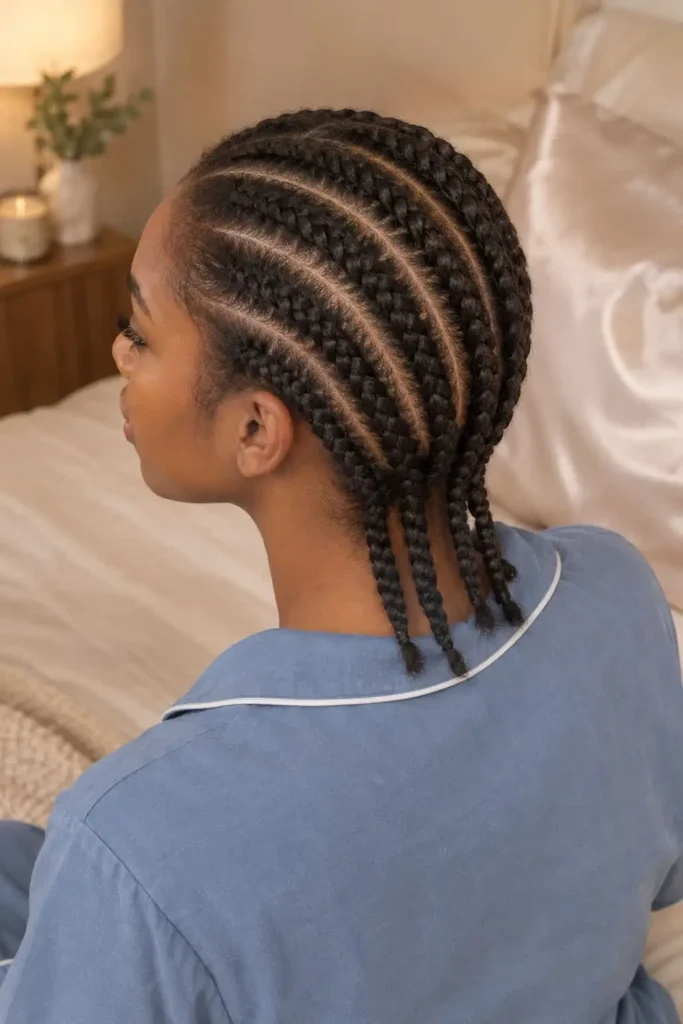
Straight-back cornrows make a protective hairstyle needing virtually no maintenance, which suits natural hair wearers. Braid them before bed, and hair stays tucked away overnight, giving a genuine break from styling. For more protective braided updo inspiration, see our braided bun hairstyles for Black hair guide. Dab scalp serum between braids to moisturize the scalp, since dryness shows up fast under tight rows. Sleep comes easier when the parts stay neat, and cute cornrows can be worn all the time without fuss.
13. Buns and Braids for Damp Hair
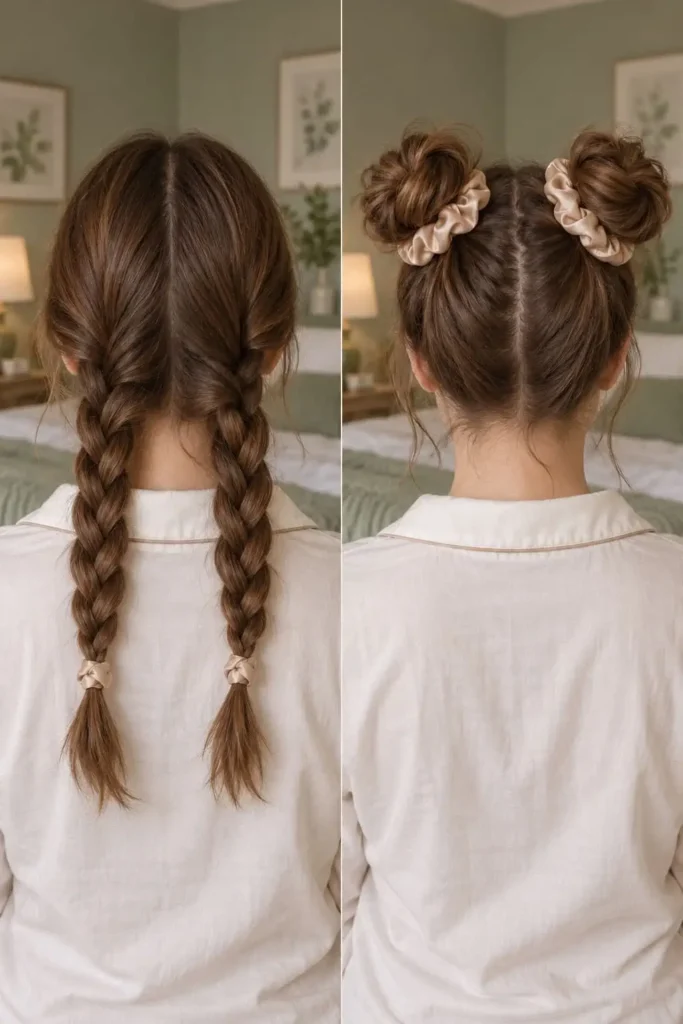
Wet strands are fragile, so keep both braids and buns slack. By morning, unravel them and wake up to soft natural-looking waves, provided your dry hair check passes: nothing cold, clammy, or stiff at the roots. Skip snap clips and tension: section damp hair down the middle, then form two loose braids or two loose buns so strands dry safely overnight with no heat damage, never forcing wet hair into tight shapes.
FAQs for Protective Hairstyles for Sleep
What’s the best hairstyle for sleeping?
For most people, the best hairstyle for sleeping is a loose protective style that keeps long hair contained without tension. Loose braids stay comfortable overnight and cut friction against the pillow, so strands wake up smoother. Wavy hair and curls do well with a high pineapple, while a single braid suits straight hair. Skip sleeping with hair fully down, since tangles form quickly, and a soft bun or twisted buns work too.
How do I protect my hair at night?
To protect hair at night, start with detangled hair, then gather it into a loose braid that tucks ends inward. A silk scrunchie holds it gently, unlike a rubber band, which snaps strands, especially on dry hair. Textured hair can gather curls into a pineapple, while straight hair does well in a sleeper bun with a satin scrunchie. Cover everything with a bonnet, or rest on a silk pillowcase, keeping strands away from the pillow.
Is it okay to sleep with wet hair in a protective style?
Going to bed with wet hair works when the protective style stays loose. Skip anything pulling at the top of the head, since a damp strand stretches and can snap under tension. Two loose braids suit most textures, letting hair that air-dries overnight finish softly.
What’s the best overnight hairstyle for curly hair?
The pineapple remains the most popular overnight hairstyle for curly hair, and rightly so. Gathering loose curls high on the crown keeps them off the pillow, while a silk bonnet or silk pillowcase reduces friction. As a protective sleep style, it is effective and gives maximum curl protection.
Are protective hairstyles good for hair growth?
Contrary to popular belief, protective hairstyles never make a follicle produce faster; hair growth happens at the scalp regardless. What they do is stop ends from breaking, so length stays put, and those retained inches feel like speeding up growth. A loose braid or twist under a satin pillow cuts friction while the head turns all night, minimizing breakage and preserving length. Stick with overnight styles, and hair grows longer over time, looking healthier too.